Demographic Shifts Among Regular Players in Austria's Weekly Number Draws
Geschrieben von Erik Jung · 20.9.2026
Demographic Shifts Among Regular Players in Austria's Weekly Number Draws
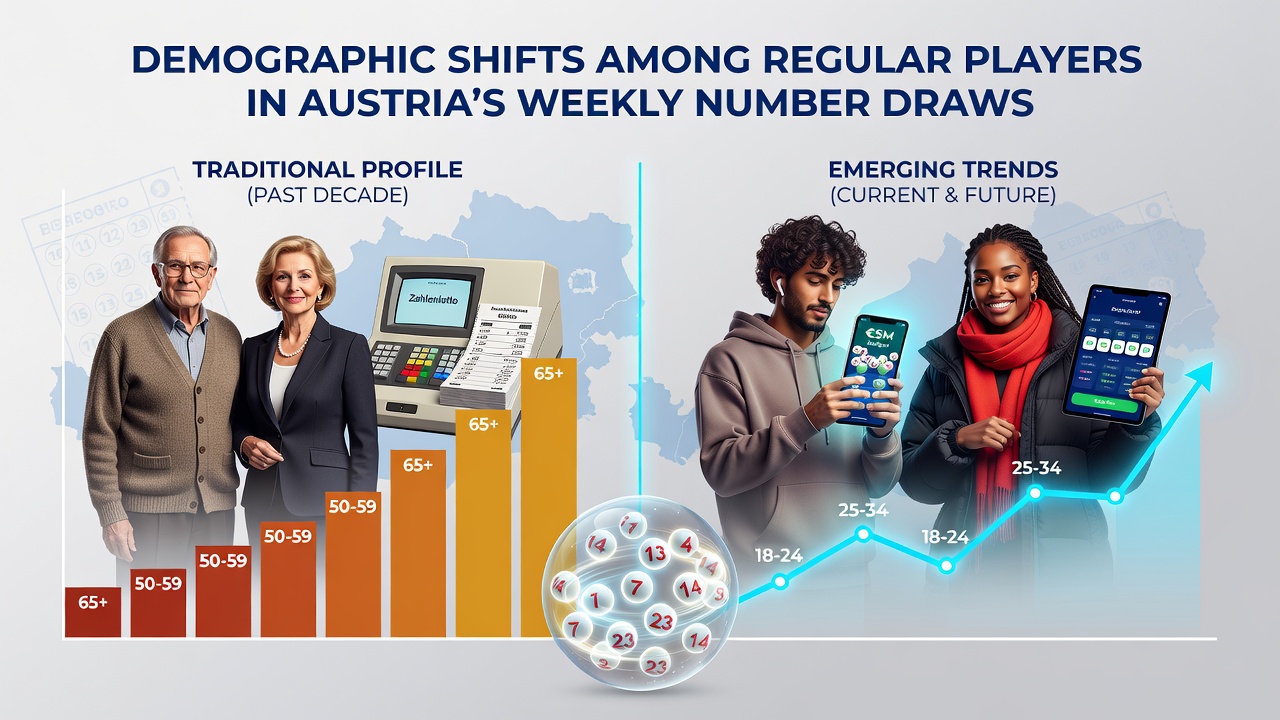
Analyses of participation data from Austria's weekly number draws reveal clear changes in the makeup of regular players, with shifts driven by broader access through digital platforms and evolving social patterns across regions. Observers note that these adjustments have unfolded steadily since the expansion of online ticket options, and researchers track them through sales records combined with surveys conducted by lottery operators. Data from the past decade shows movement away from older rural demographics toward a wider mix that includes urban professionals and younger adults, while overall participation numbers remain stable according to official tallies.
Historical Participation Patterns
Traditional player bases in Austria centered on older adults in smaller towns and villages, where weekly draws served as established community rituals tied to physical retail outlets, and records indicate consistent engagement from those over fifty throughout the 2000s. Yet by the mid-2010s, operators began recording gradual declines in that core group alongside rises in other segments, particularly as smartphone applications simplified entry for working-age residents in cities like Vienna and Graz. Studies compiled by national statistical bodies highlight how these trends accelerated after 2018 when regulatory approvals allowed broader digital integration, leading to measurable redistribution in player profiles without altering total ticket volumes.
Age and Gender Distributions in Recent Data
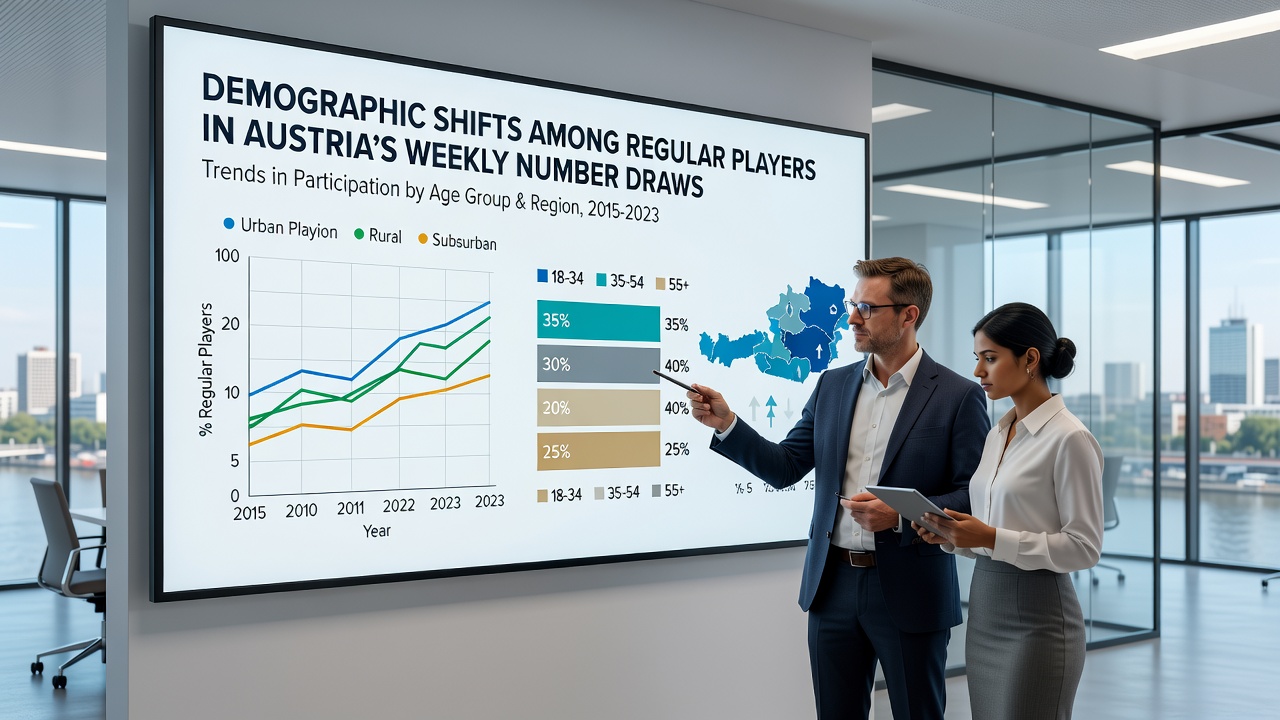
Current figures indicate a notable increase in players aged twenty-five to forty-four, who now account for nearly forty percent of regular participants in weekly draws, compared with lower shares a decade earlier. This group often combines online subscriptions with occasional in-person purchases, and evidence from operator reports shows they favor structured number selections over quick picks more frequently than prior generations. Meanwhile the proportion of participants over sixty-five has contracted, though absolute numbers hold steady in certain eastern provinces where community syndicates persist. Gender breakdowns reveal women comprising a growing share, rising from roughly thirty-five percent to over forty-two percent in tracked cohorts, with many citing social features in apps as entry points. Researchers at institutions across Europe have documented similar patterns in neighboring markets, confirming that Austria's shifts align with wider continental developments tracked through coordinated data exchanges.
One study released by a research team at the University of Melbourne examined comparable lottery systems and found digital interfaces correlate with higher female involvement across multiple countries, providing context for the Austrian observations without implying causation.
Regional and Socioeconomic Variations
Urban centers continue to drive much of the growth in newer player segments, whereas rural areas retain higher loyalty among long-term participants even as overall density decreases. Statistics Austria data shows Vienna and surrounding districts posting the steepest rises in younger subscribers, while alpine regions maintain steadier profiles dominated by established buyers. Socioeconomic indicators point to middle-income households sustaining the bulk of regular play, although lower-income groups in industrial zones appear in growing numbers through promotional bundles introduced in 2024. These distributions reflect infrastructure differences, since reliable broadband access influences online uptake more than lottery interest itself, and operators adjust retail networks accordingly in less connected districts.
Projected Trends Through September 2026
Forward-looking models based on 2025 participation logs suggest continued moderation in age gaps, with the twenty-five to forty-four cohort potentially reaching forty-five percent by September 2026 if current digital adoption rates hold. Regional disparities may narrow further as mobile coverage expands into additional provinces, and gender parity edges closer according to internal forecasting from the national lottery administration. External factors such as economic conditions and public awareness campaigns around responsible play also factor into these projections, though core demographic momentum stems from platform accessibility rather than external events. Analysts cross-reference these estimates with Eurostat mobility reports to account for population movements that could influence local draw participation.
Implications for Operator Strategies
Lottery organizers respond to these documented shifts by refining product offerings and communication channels, such as targeted app notifications for urban demographics and community events in rural zones. Sales channel data reveals online transactions surpassing forty-eight percent of weekly volume in 2025, underscoring the need for interface updates that accommodate varied user preferences. Trade associations in the European gaming sector have noted similar adaptations elsewhere, emphasizing data-driven allocation of resources to match evolving player bases while maintaining regulatory compliance across all regions.
Conclusion
Demographic records for Austria's weekly number draws demonstrate ongoing evolution shaped by technology and societal changes, with age, gender, and location patterns shifting in measurable ways through documented sales and survey evidence. Continued monitoring by operators and statistical agencies will track these developments into late 2026 and beyond, providing updated snapshots that reflect both continuity in core participation and adaptation among emerging groups.