Inside the Certification Processes Ensuring Fairness in Austria's Random Number Generation Systems
Geschrieben von Riley Koch · 23.8.2026
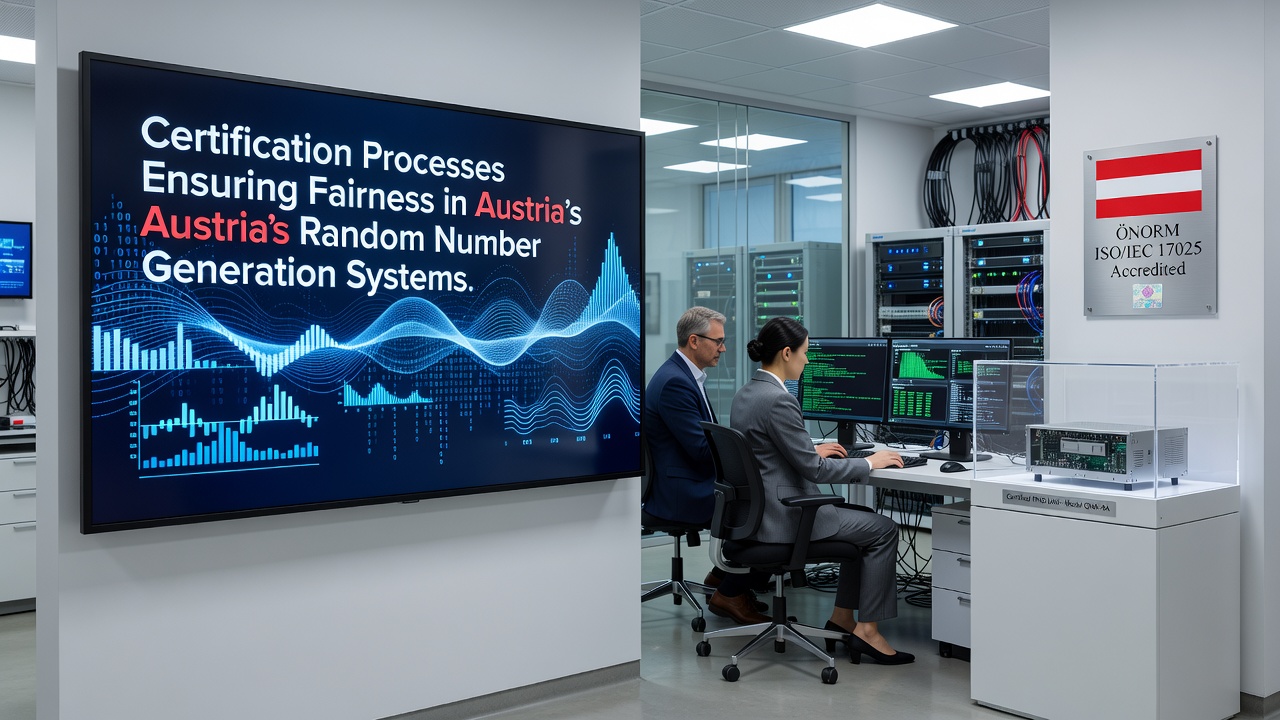
Inside the Certification Processes Ensuring Fairness in Austria's Random Number Generation Systems
Random number generation systems form the backbone of Austria's lottery operations, and certification processes verify that every draw meets strict statistical standards for unpredictability and fairness. Observers note that these systems undergo repeated evaluations before they ever process a single ticket, while regulators require ongoing audits to maintain compliance throughout the equipment's operational life. Data from the Austrian Federal Ministry of Finance shows that lotteries must demonstrate adherence to both national rules and broader European technical specifications before receiving approval for public use.
Core Principles Behind RNG Certification
Certification begins with hardware and software assessments that examine entropy sources, output distributions, and resistance to external manipulation, and experts apply statistical test suites such as those outlined by the National Institute of Standards and Technology to confirm uniformity across millions of generated sequences. Researchers at independent laboratories run continuous simulations that replicate real-world draw conditions, and any deviation triggers immediate redesign requirements before the system advances to the next stage. Those who oversee these evaluations emphasize that the process never ends after initial approval, because firmware updates or hardware replacements automatically restart parts of the review cycle.
Independent Bodies and Their Testing Protocols
Accredited testing houses conduct the majority of technical examinations for Austrian operators, and these organizations maintain ISO 17025 accreditation to ensure laboratory procedures meet international measurement standards. One study released by the World Lottery Association in 2024 documented how certification timelines typically span four to six months when full documentation and source code access are provided promptly. Testing includes both black-box analysis, where evaluators treat the system as an opaque unit, and white-box reviews that inspect internal algorithms for hidden patterns or predictable sequences.
Austria's Regulatory Framework and 2026 Developments
Austrian law places oversight responsibility with the Federal Ministry of Finance, which coordinates with the Austrian Gaming Authority to enforce draw integrity rules across all licensed operators. In August 2026 the ministry plans to align select certification criteria more closely with updated European Commission technical guidelines on electronic gaming systems, a move that will require operators to submit fresh validation reports for any RNG platforms still operating under older protocols. This alignment affects both physical draw machines and fully electronic systems used for online products, and compliance deadlines have already prompted several providers to schedule pre-audit consultations with accredited labs.
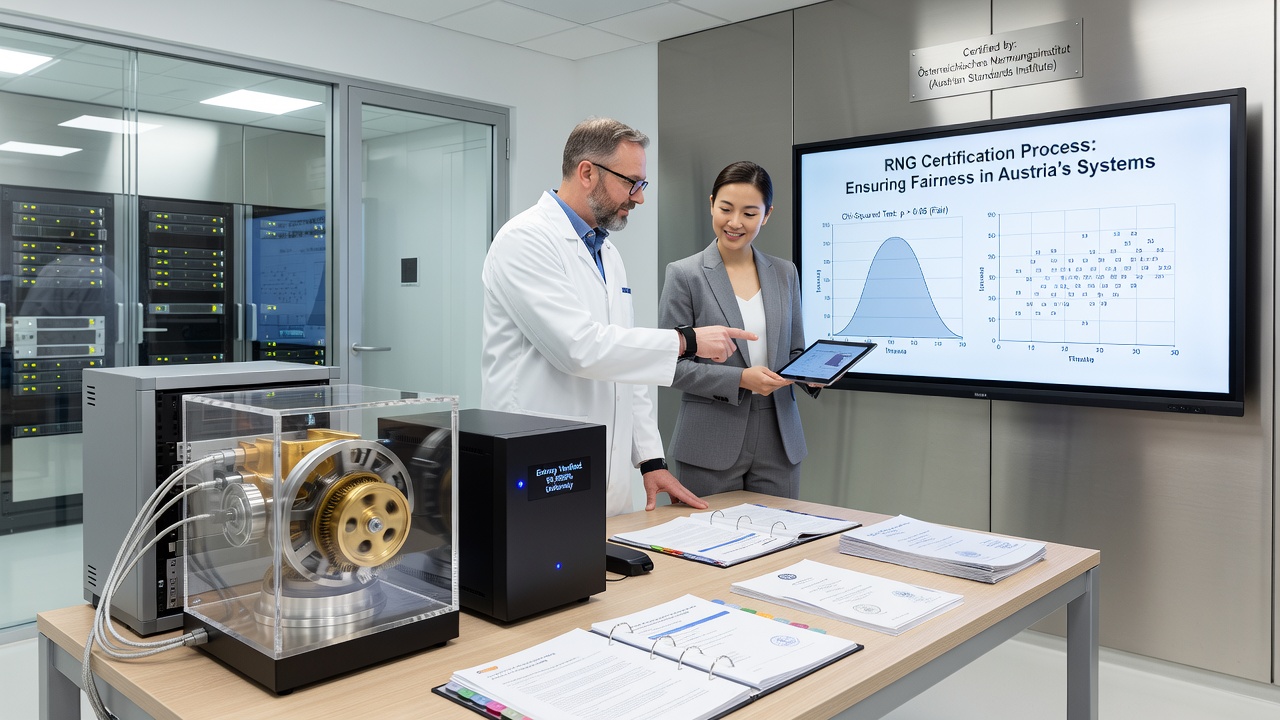
Statistical Testing and Continuous Monitoring
Once a system passes initial certification it enters a phase of continuous monitoring that collects live draw data for periodic comparison against expected probability models. Laboratories receive encrypted data feeds directly from the operator's central servers, and analysts apply chi-square, runs, and serial correlation tests at regular intervals to detect any emerging bias. When anomalies appear, even at levels well below regulatory thresholds, operators must pause affected games until root-cause investigations conclude and corrective actions receive approval from the oversight authority.
Documentation and Traceability Requirements
Every certified RNG installation must maintain detailed audit trails that record hardware serial numbers, software versions, and every maintenance intervention performed on the equipment. Austrian regulations mandate that these records remain accessible for at least seven years, and inspectors can request full access during both scheduled and unannounced visits. The requirement ensures that any future discrepancy can be traced back through the entire operational history rather than relying solely on current performance snapshots.
Conclusion
Certification processes for Austria's random number generation systems combine rigorous initial testing with sustained oversight mechanisms that adapt to technological changes and evolving regulatory expectations. As operators prepare for the 2026 alignment with updated European guidelines, the emphasis remains on verifiable statistical integrity and transparent record-keeping that together support public confidence in every draw outcome.